

Next-Generation Regenerative Medicine
MUSE Cells for Regeneration
Multilineage-differentiating Stress-Enduring (MUSE) cells — discovered by Dr. Mari Dezawa — are intelligent, naturally occurring cells that detect injury signals, migrate to damaged tissue, and support true repair from within.
Why Patients Choose MUSE Cells
- Discovered by Dr. Mari Dezawa (2010)
- Home directly to sites of injury
- Bypass the lung “trap” after IV delivery
- Pluripotent-like differentiation potential
- Non-tumorigenic & immune-privileged
- Support whole-body tissue repair
Understanding the Science
What Are MUSE Cells?
MUSE cells (Multilineage-differentiating Stress-Enduring cells) are a rare, naturally occurring subpopulation of mesenchymal stem cells (MSCs). They express the pluripotency surface marker SSEA-3 and can differentiate into cell types from all three germ layers — ectoderm, mesoderm, and endoderm.
Unlike typical MSCs, MUSE cells are stress-enduring: they survive harsh conditions that destroy other cell types. After intravenous delivery they actively seek out damaged tissue rather than remaining trapped in the lungs.
Key distinction: Research shows MUSE cells can detect injury signals (including sphingosine-1-phosphate / S1P), migrate beyond the pulmonary system, integrate into damaged areas, and contribute directly to tissue repair.
At ReGen Pain & Wellness, we focus on advanced regenerative approaches that stimulate the body’s own healing capacity. MUSE cell biology aligns with our philosophy of repairing the root cause rather than simply managing symptoms.
The Science Behind the Discovery
Dr. Mari Dezawa & the Origin of MUSE Cells
MUSE cells were discovered in 2010 by Professor Mari Dezawa, MD, PhD, at Tohoku University in Japan — a landmark finding that opened a new chapter in regenerative medicine.
Professor Mari Dezawa, MD, PhD
Dr. Dezawa is Professor and Chair of the Department of Stem Cell Biology and Histology at Tohoku University Graduate School of Medicine. She is an internationally recognized stem-cell scientist whose work has helped shape modern regenerative medicine.
In 2010 her laboratory identified a unique population of pluripotent-like cells within adult human mesenchymal tissues. These cells — later named multilineage-differentiating stress-enduring (MUSE) cells — combine the ability to differentiate across all three germ layers with a non-tumorigenic, immune-privileged safety profile.
“Most stem cells never reach the injury. Dezawa MuseCells® do. They detect the distress signal released by damaged tissue, migrate to the source, and support repair.”
The foundational research was published in PNAS (2010) and later detailed in Nature Protocols (2013). Since then, more than a decade of peer-reviewed studies have examined MUSE cells across the heart, brain, liver, spinal cord, and other organ systems. Clinical trials have explored applications in ischemic stroke, myocardial infarction, spinal cord injury, and neonatal hypoxic-ischemic encephalopathy.
The Healing Process
How MUSE Cells Find & Repair Damage
After intravenous administration, MUSE cells follow a clear biological pathway from the bloodstream to the site of injury.
1
Enter Circulation
MUSE cells are delivered systemically and travel ready to respond anywhere in the body.
2
Detect the Signal
Damaged tissue releases S1P (sphingosine-1-phosphate). MUSE cells sense it through the S1PR2 receptor.
3
Home to Injury
They migrate beyond the lung first-pass trap and vector directly toward the source of damage.
4
Repair Tissue
Once at the site they integrate, clear debris, differentiate into local cell types, and support regeneration.
Why MUSE Cells Stand Out
Key Advantages for Regenerative Healing
These properties — drawn from the body of research pioneered by Dr. Dezawa — make MUSE cells one of the most promising platforms in modern regenerative medicine.
Stress-Enduring
Highly resistant to harsh conditions (low oxygen, oxidative stress) that typically kill other stem cells — improving survival after delivery.
Injury-Directed Homing
Detect S1P signals and migrate efficiently to damaged organs — with greater ability to pass beyond the lungs than typical MSCs.
Pluripotent-Like Potential
Capable of generating cell types from all three germ layers, expanding possible applications beyond standard MSCs.
Non-Tumorigenic
Low telomerase activity and established safety profile — they do not form tumors in documented research settings.
Immune-Privileged
Demonstrate immunomodulatory properties that support allogeneic (donor) use without the need for heavy immunosuppression in many contexts.
True Tissue Contribution
Research shows MUSE cells can directly replace damaged cells and contribute functionally to tissue regeneration.
Clinical Potential
Where MUSE Cells May Support Healing
Research and clinical exploration have examined MUSE cells across a wide range of conditions — many of which align with the regenerative goals of patients seeking non-surgical solutions.
🦴
Orthopedic & Joint Health
Support for cartilage, bone, tendon, and ligament repair in degenerative and injury-related conditions.
🧠
Neurological Recovery
Investigated for stroke, traumatic brain injury, spinal cord injury, and hypoxic-ischemic conditions.
❤️
Cardiac & Organ Repair
Studied for myocardial infarction, liver injury, and other organ-level regenerative applications.
🦵
Chronic Pain & Soft Tissue
Potential to address underlying tissue damage that drives persistent musculoskeletal pain.
⏳
Aging & Longevity
Emerging interest in systemic regenerative effects and biological resilience / healthspan optimization.
🔥
Inflammation Modulation
Immune-modulatory actions that may help calm chronic inflammatory environments.
Context
MUSE Cells vs. Conventional MSCs
A simplified comparison based on published characteristics of MUSE cells relative to typical mesenchymal stem cell populations.
| Characteristic | Typical MSCs | MUSE Cells (Dezawa) |
|---|---|---|
| Pluripotency markers (SSEA-3, etc.) | Limited / Absent | Present |
| Differentiation range | Primarily mesoderm | Triploblastic (all 3 layers) |
| Stress resistance | Moderate | High (stress-enduring) |
| Distribution after IV injection | Often trapped in lungs | Target damaged organs |
| Homing efficiency to injury | Low / variable | Efficient (S1P / S1PR2) |
| Tumorigenicity risk | Low | Very low / non-tumorigenic |
| Immune privilege | Present | Strong |
Common Questions
Frequently Asked Questions
Who discovered MUSE cells?
Professor Mari Dezawa, MD, PhD, and her colleagues at Tohoku University in Japan first described MUSE cells in a 2010 paper published in PNAS. Her laboratory continues to lead research into their mechanisms and clinical potential.
Are MUSE cells the same as regular stem cells?
No. MUSE cells are a specific, rare subset (roughly 1–2%) found within mesenchymal stem cell populations. They carry additional pluripotency markers and unique stress-enduring and injury-directed homing abilities that distinguish them from the broader MSC population.
Why do MUSE cells reach damaged tissue better than typical MSCs?
After IV delivery, many conventional MSCs become trapped in the lungs (first-pass effect). Research indicates MUSE cells can sense injury-related signals such as S1P and migrate more efficiently beyond the pulmonary system toward the actual site of damage.
Are MUSE cells considered safe?
Published research highlights a favorable safety profile: they are non-tumorigenic, show low telomerase activity, and possess immune-modulatory characteristics. As with any regenerative therapy, treatment should be provided by qualified clinicians in appropriate clinical settings.
How does this fit with the treatments already offered at ReGen?
Our practice already emphasizes regenerative strategies — PRP, neural prolotherapy, ozone, peptides, and functional rehabilitation — that work with the body’s natural repair systems. MUSE cell biology represents an exciting extension of that same philosophy of root-cause healing.
Is this therapy right for me?
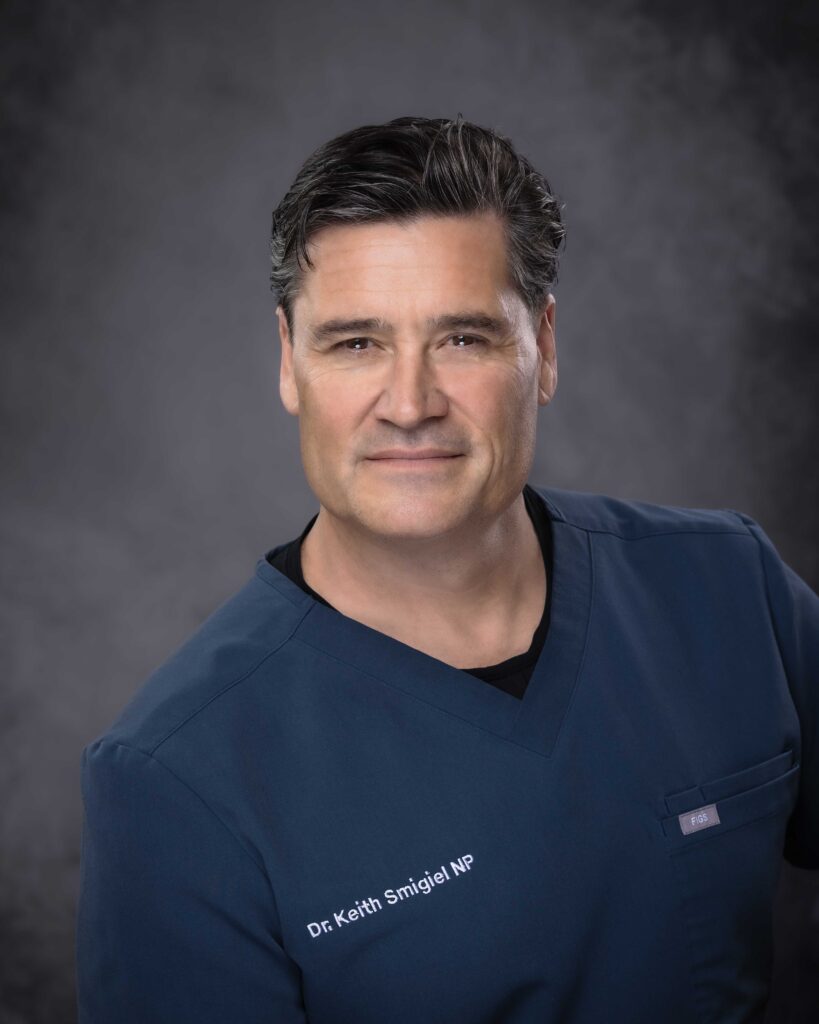
Every patient is unique. The best next step is a consultation with Dr. Smigiel to review your history, goals, and the most appropriate regenerative options available for your situation.
Heal the Body — Don’t Just Treat the Symptoms
Schedule your free consultation and discover how advanced regenerative approaches can help you get back to the life you love.
Call Now for Your Free Consultation